


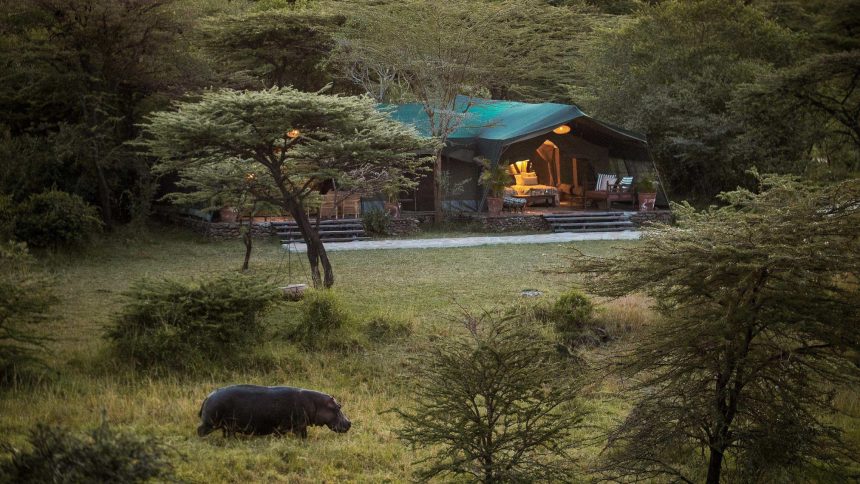
Nairobi-based Hemingways Collection has completed a heritage-focused interior refurbishment of Hemingways River Camp Mara, its eight-tent safari camp in Kenya’s Mara North Conservancy, and paired it with new solar water heating and upgraded waste management systems, the group said in a press release dated 9 September 2026. The announcement comes just under 14 months after Hemingways acquired the property, then known as Richard’s River Camp, in July 2025 for a sum it did not disclose, as Business Daily reported at the time. The works themselves were finished earlier in 2026, ahead of this year’s wildebeest migration season, and the camp is fully open, a representative for the group told Property News Africa. Hemingways says the environmental upgrades are intended to move the camp toward its first Ecotourism Kenya certification. The rating has not yet been awarded. Hemingways has not disclosed the cost of the works.
For property investors, the interesting part sits underneath the soft furnishings. River Camp Mara is a hospitality asset on land leased from hundreds of individual Maasai landowners, inside a conservancy that deliberately caps the number of beds. That structure shapes both the returns and the risks.
What Has Changed at River Camp Mara
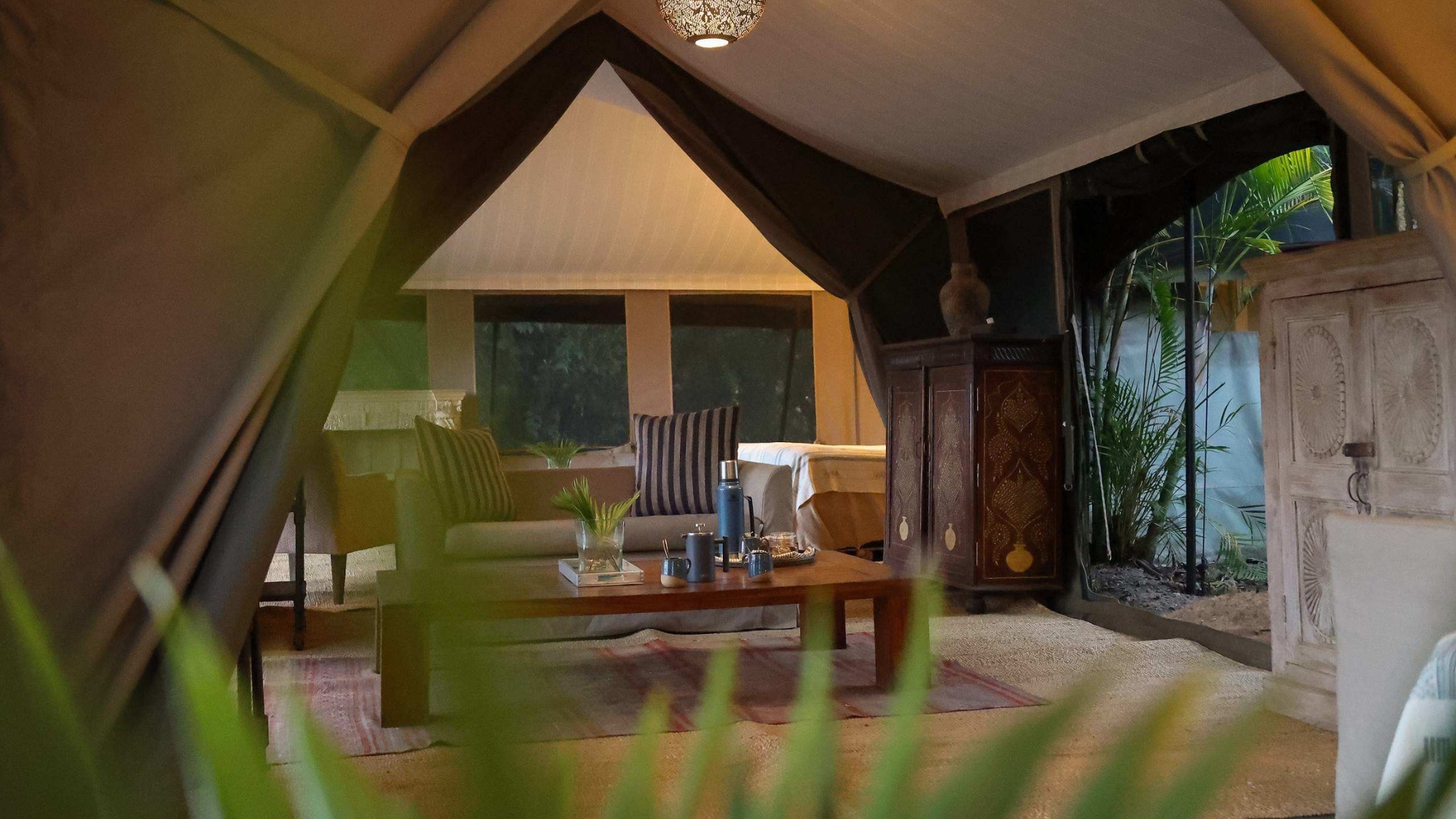
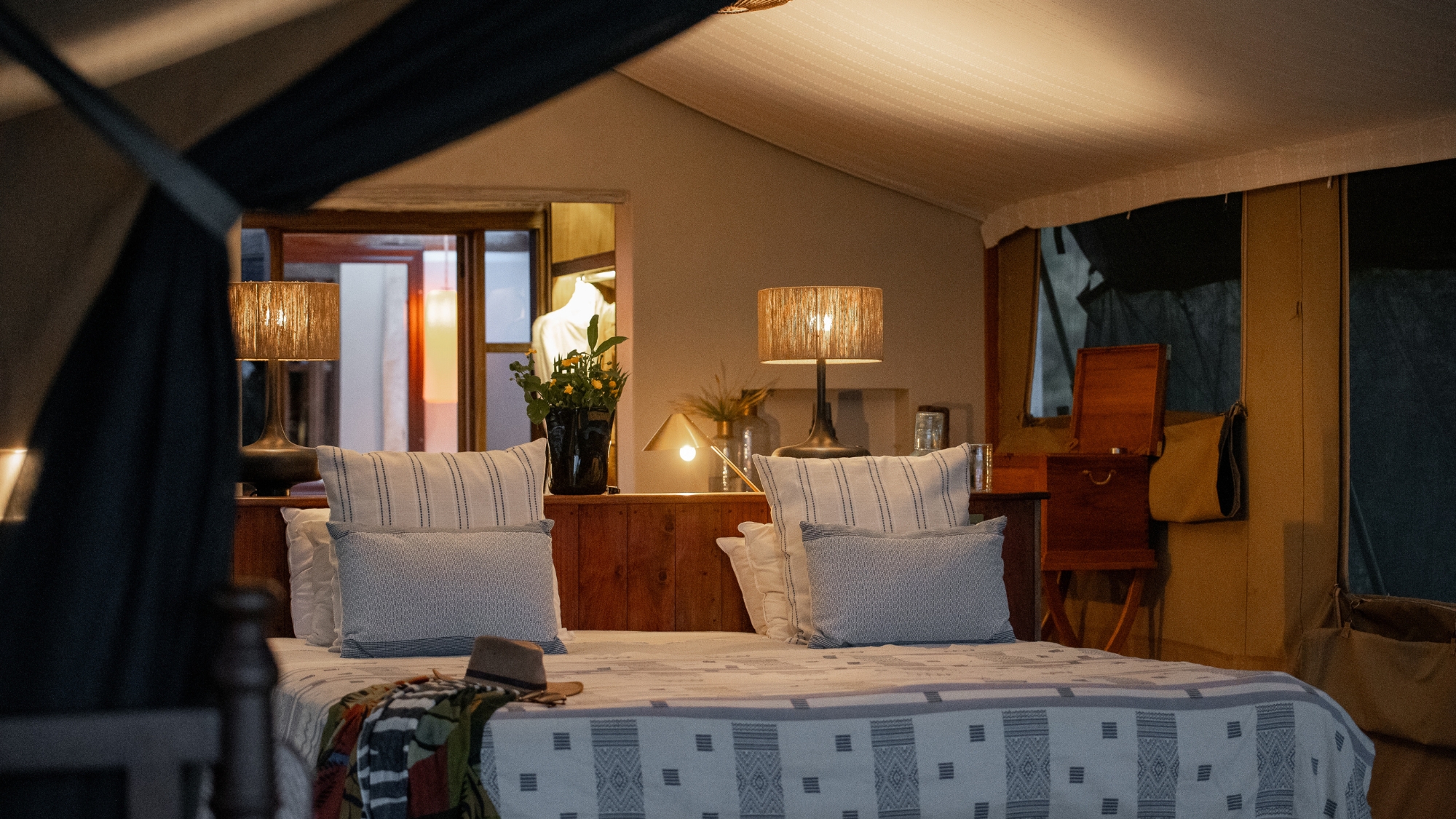
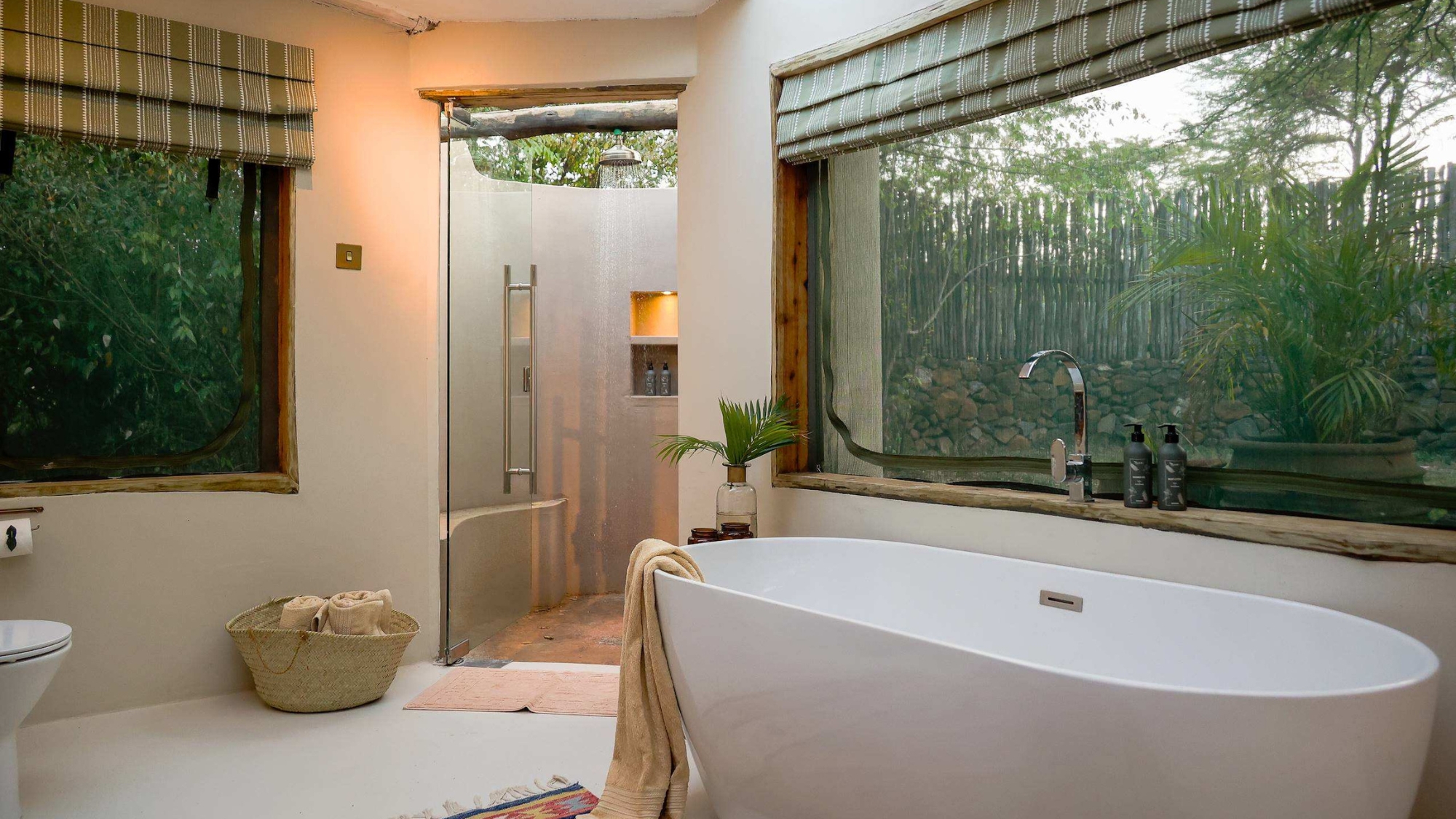
Hemingways partnered with Nairobi-based interior and building design studio White Elephant Trading Company on the redesign, a representative for the group told Property News Africa. The project opened up the tented guest quarters, brightened the en-suite bathrooms and reworked the main dining tent and lounge. Existing solid timber furniture and handcrafted details were kept to preserve a lived-in, heritage feel. The new layers include textiles printed in Nairobi, custom pieces made by artisans from the Mara, woven Mandalay bedspreads and vintage Istanbul rugs.
Chris Payne, White Elephant’s creative director, said the aim was for the spaces to feel “deeply connected to their setting without looking newly built”. Payne is also credited with the interiors of Wilderness Mara, the reworked former Little Governors’ Camp. That makes River Camp Mara the second heritage camp in the Mara this year to be refreshed by the same studio, and in both cases the owner chose to rework an existing camp over replacing it.
The camp’s footprint is unchanged. The group’s own property page lists six Luxury Tents, one Family Suite and one Private Suite set along the Njageteck River, and the camp had 18 beds when it changed hands.
On the operational side, the group cites two infrastructure upgrades: solar water heating, which now supplies the camp’s hot water, and refined waste management systems. Technical specifications have not been published.
Group chief executive Ross Evans framed the project as a response to changing demand, saying luxury travellers now expect high-end hospitality to feel “authentic, locally grounded and environmentally responsible”.
From Acquisition to Refurbishment in About a Year
Hemingways announced the purchase of Richard’s River Camp on 22 July 2025. The camp was built by third-generation Kenyan conservationist Richard Roberts and Liz Fusco. The deal followed the group’s acquisition of Heaven Holdings in Kigali, owner of The Retreat, Heaven Restaurant and Fusion, and its 2023 addition of Ol Seki Hemingways Mara in the neighbouring Naboisho Conservancy. It now operates two camps in the greater Mara. The family-owned group was founded in 1988 with Hemingways Watamu on the Kenyan coast and launched the Hemingways Collection brand in 2013. With the refurbishment completed before this year’s migration season, the turnaround from purchase to finished works was about a year.
The sequence is a familiar one in established safari markets: buy a well-located camp with an existing conservancy membership, rebrand it, then reinvest in interiors and back-of-house systems. It is a lower-risk route into the Mara than new construction. Business Daily, citing W Hospitality Group’s 2025 pipeline report, counted 26 hotels with 4,344 rooms in development across Kenya that year. Very little of that kind of supply can be added inside conservancies such as Mara North, where bed numbers are restricted by design.
The Conservancy Model: Land Leases as the Underlying Asset
Mara North Conservancy (MNC) is a not-for-profit entity established in January 2009. It leases parcels from individual Maasai landowners and pools them into a single wildlife area of roughly 28,500 hectares (about 70,000 acres), according to the conservancy’s own conservation data. Hemingways cites a figure of more than 73,000 acres. Member camps collect conservancy fees from guests, and those fees fund the lease payments and professional land management.
The important detail is how landowners are paid. MNC says its member camps guarantee fixed monthly lease payments regardless of how tourism is performing. In real estate terms, landowners hold something close to a ground lease with a stable income stream, while the operators carry the occupancy risk.
Supply is tightly held. MNC reports 10 permanent camps and two mobile riding outfits, and a bed density of about one bed per 336 acres, with a stated aim of reaching 350. That scarcity is part of what an operator buys when it acquires an existing member camp.
Hemingways describes its participation as a direct economic partnership with more than 1,000 Maasai landowners. The conservancy began with 750 landowners in 2009 and the Maasai Mara Wildlife Conservancies Association currently lists 783, with the count depending on whether title holders, subdivided parcels or beneficiary households are measured. Either way, the scale of the community income stream behind a camp of this size is substantial.
River Camp Mara: Project Snapshot
| Item | Detail |
|---|---|
| Property | Hemingways River Camp Mara (formerly Richard’s River Camp) |
| Owner / operator | Hemingways Collection (Hemingways Hospitality Group), Nairobi |
| Location | Njageteck River, Mara North Conservancy, Narok County, Kenya |
| Inventory | 8 tents: 6 Luxury Tents, 1 Family Suite, 1 Private Suite (18 beds at acquisition) |
| Acquired | 22 July 2025. Transaction value not disclosed |
| Works completed | Earlier in 2026, ahead of the migration season; announced 9 September 2026. Camp fully open |
| Interior design | White Elephant Trading Company, Nairobi (Creative Director: Chris Payne) |
| Project cost | Not disclosed |
| Scope of works | Guest tents opened up; en-suite bathrooms brightened; dining tent and lounge reworked; solar water heating; upgraded waste management |
| Certification status | Working toward a first Ecotourism Kenya eco-rating (Bronze, Silver or Gold). Not yet awarded |
| Conservancy | Not-for-profit, est. January 2009; about 28,500 ha (roughly 70,000 acres); 10 permanent camps plus 2 mobile outfits |
| Landowner partners | 1,000+ (Hemingways); 783 currently listed by MMWCA; 750 at founding in 2009 |
| Lease structure | Fixed monthly payments to landowners, funded by conservancy fees, independent of occupancy (per MNC) |
What the Ecotourism Kenya Certification Would Mean
Ecotourism Kenya’s eco-rating scheme is the benchmark Kenyan camps and lodges are measured against. Launched in 2002 and recognised by the Global Sustainable Tourism Council, it grades accommodation at Bronze, Silver or Gold across environmental management, waste, energy and water use, benefits to staff and the local community, cultural preservation and guest education. Applications run through a desk evaluation, a field audit and a committee review, and a rating lasts 24 months before reassessment.
Hemingways says the solar water heating and waste management upgrades are aimed at securing the camp’s first rating. Because the scheme scores community benefit alongside environmental performance, a camp inside a conservancy that pays fixed monthly leases to Maasai landowners starts from a strong position on the socio-economic criteria. The rating has not yet been awarded, so it is a target rather than a credential for now, but it gives the refurbishment a measurable outcome to be judged against.
What this means for African property investors
The lease is the asset. Conservancy hospitality is a land-lease structure first and a hotel business second. Landowners receive fixed monthly income whatever the occupancy, and the operator absorbs the demand risk. Anyone underwriting a camp in this model should start with the lease terms, the renewal profile and the conservancy’s governance, then look at the rooms.
Scarcity drives the acquire-and-refurbish play. With bed density capped at around one per 336 acres and only a dozen tourism partners in Mara North, growth comes from buying existing memberships and lifting rate through reinvestment. Expect more consolidation of owner-run camps by regional groups with capital.
Sustainability capex is becoming a baseline cost. Solar water heating and waste systems are now part of what premium positioning and third-party certification require. Budget for them in any East African hospitality feasibility, and treat a pending certification as intent until it is awarded.
Before you underwrite: Hemingways is privately held and has not published capex, occupancy or return figures for this project, so any modelling of conservancy hospitality should be built from lease terms and independent market data. Confirm eco-ratings directly with Ecotourism Kenya, since certification is awarded after a field audit rather than on announcement.
Sources
- Hemingways Collection, press release, 9 September 2026 (supplied to Property News Africa)
- Additional information supplied to Property News Africa by a representative of Hemingways Collection, September 2026
- Hemingways Collection: River Camp Mara property page
- Hemingways Collection: Richard’s River Camp joins Hemingways Collection, 22 July 2025
- Business Daily Africa: Hemingways acquires another Maasai Mara luxury camp, July 2025
- Mara North Conservancy: Our Story, Conservation and Community pages
- Maasai Mara Wildlife Conservancies Association: Mara Conservancies listing
- Ecotourism Kenya: Eco-rating certification, standards and best practices
- White Elephant Trading Company: company website
- Wilderness: Wilderness Mara press release, July 2026
Related Articles
- Floton Africa Unveils $50 Million in Zanzibar Tourism and Residential Projects at the ZIPA Investment Summit 2026
- EAPI Summit 2026: East Africa’s Premier Real Estate and Hospitality Gathering Returns to Nairobi
- Kenya’s Housing Levy Alone Can’t Fund 200,000 Homes a Year, PS Says
- 1,168 New Apartments Planned for Nairobi’s Westlands and Kilimani as NEMA Opens Public Review
Disclaimer: This article is for information only and does not constitute investment, financial or travel advice. Company statements, including sustainability and community-partnership claims, are reported as supplied and should be independently verified before any investment decision.
Research assisted by AI. All sources verified by the editorial team.
© 2026 propertynews.africa


