



South Africa’s fuel price cuts for July 2026 are giving developers a rare piece of good news on the cost side, with the Department of Mineral and Petroleum Resources confirming steep decreases in petrol and diesel effective 1 July. According to analysis from Aethex Strategy Group reported by IOL Property, the relief could meaningfully lower construction and civil engineering costs on major KwaZulu-Natal North Coast developments, though rising electricity and water tariffs mean the broader cost picture for developers remains mixed.
What changed on 1 July
The fuel price adjustment follows a drop in international crude prices and a stronger rand. The Department said the average Brent Crude price fell from roughly $104.59 to $86.53 a barrel over the review period, aided by an easing global supply outlook after a Memorandum of Understanding between the US and Iran. At the same time, the temporary fuel levy relief introduced earlier in the year to cushion the impact of the US-Iran conflict has been phased out, meaning the full fuel levy has now been reinstated alongside the underlying price drop.
Fuel Price Snapshot: July 2026
| Fuel Type | July Change | Coastal Price* | Inland / Gauteng Price* |
|---|---|---|---|
| Petrol 93 (ULP/LRP) | -R2.01/litre | – | R25.94 |
| Petrol 95 (ULP/LRP) | -R1.96/litre | R25.23 | R26.11 |
| Diesel 0.05% (wholesale) | -R3.14/litre | R23.91 | R24.78 |
| Diesel 0.005% (wholesale) | -R3.58/litre | R24.41 | R25.16 |
*Retail pump prices for petrol; wholesale reference prices for diesel, per the Department of Mineral and Petroleum Resources.
Why developers are paying attention
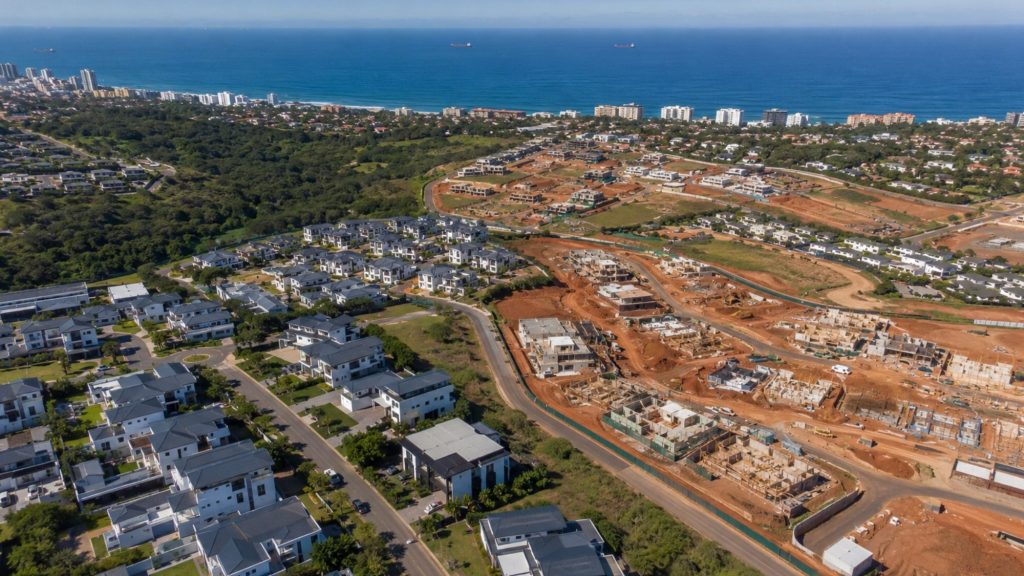
Mthobisi Dlamini, founder and strategic consultant at Aethex Strategy Group, says the impact of cheaper fuel extends well beyond the pump. He points to large-scale developments across Umhlanga, Sibaya, Ballito and Sheffield as prime beneficiaries, given how capital-intensive property development is along the KZN North Coast, where projects depend heavily on bulk infrastructure works and heavy earth-moving equipment.
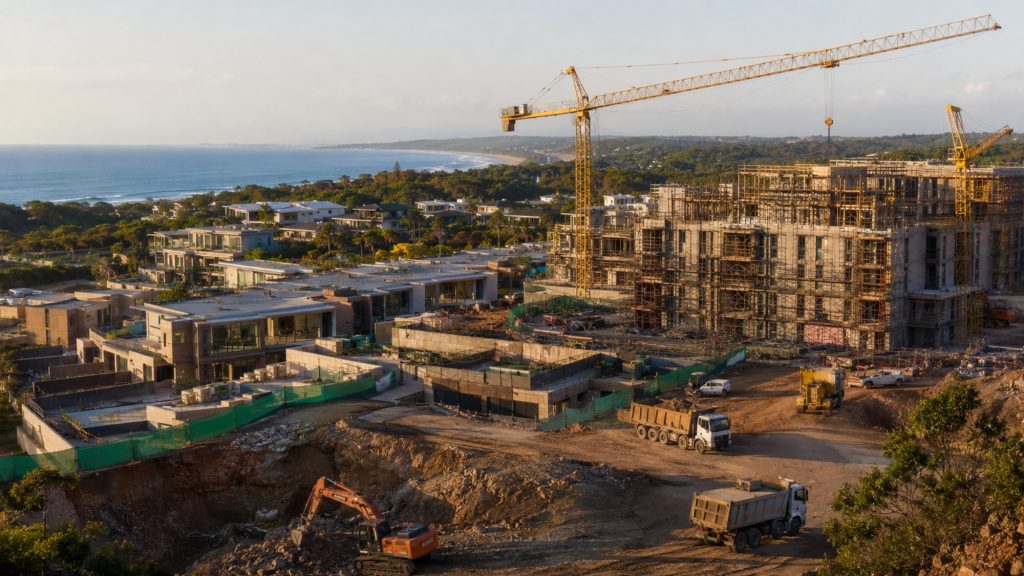
Cheaper diesel lowers running costs for that machinery and eases transport costs for bulk materials such as cement, bricks and steel — inputs that make up a significant share of a development’s build cost. Dlamini also links the fuel relief to the region’s ongoing semigration trend: lower transport costs along the Ballito-to-Umhlanga commuter corridor increase household disposable income, which in turn can improve affordability assessments during home loan applications.
On the macro side, Dlamini argues that a sharp fuel-driven disinflation event strengthens the case for the South African Reserve Bank to pause or cut interest rates sooner, which would flow through to lower financing costs for developers carrying debt on active projects.
The relief has limits
Not all administered costs are moving in the same direction. Daan Steenkamp, economist and chief executive of Codera Analytics, notes that electricity prices have risen by more than 700% since January 2008, with health insurance costs up more than 400% over the same period — both well ahead of the roughly 150% rise in overall inflation. Telecommunications costs have bucked the trend and become cheaper over time, but Steenkamp says utilities continue to place growing pressure on households and businesses, offsetting some of the benefit developers see from cheaper fuel.
Separately, Tyrelle Correa, who leads GIB’s newly formalised mining and construction divisions, warns that the sector still faces mounting risk from project delays, material theft, supply chain disruption, severe weather and geopolitical uncertainty. He notes that shifting input costs — steel, fuel and labour — can alter a project’s insured value mid-build, creating a real risk of underinsurance if specialist advice isn’t in place.
A one-month fuel price cut won’t transform project economics on its own, and developer estimates of the flow-through benefit — including any suggestion that this accelerates SARB rate cuts — are estimates, not guarantees. But for investors tracking KZN North Coast nodes like Umhlanga, Sibaya and Ballito, cheaper diesel is a genuine, if temporary, margin tailwind on capital-intensive civil works. The more durable risk sits with administered costs: electricity and water tariffs are structurally rising and will likely matter more to long-run development economics than any single month’s fuel relief. Investors should also weight in the underinsurance risk flagged by GIB — volatile input costs mid-project are a real threat to project viability, not just a margin question.
Sources
Related Articles
- How Prolonged High Interest Rates Are Reshaping South Africa’s Property Market
- How Rising Construction Costs Are Affecting South Africa’s Property Market
- Why Semigration Keeps Driving Demand Along the Umhlanga-Ballito Corridor
Note to editor: confirm these slugs match live articles on propertynews.africa before publishing.
Research assisted by AI. All sources verified by the editorial team. © 2026 propertynews.africa


